
Emergency LightingAcross East Anglia.
Installation, testing and maintenance planned around your building’s emergency lighting requirements.
Discuss your project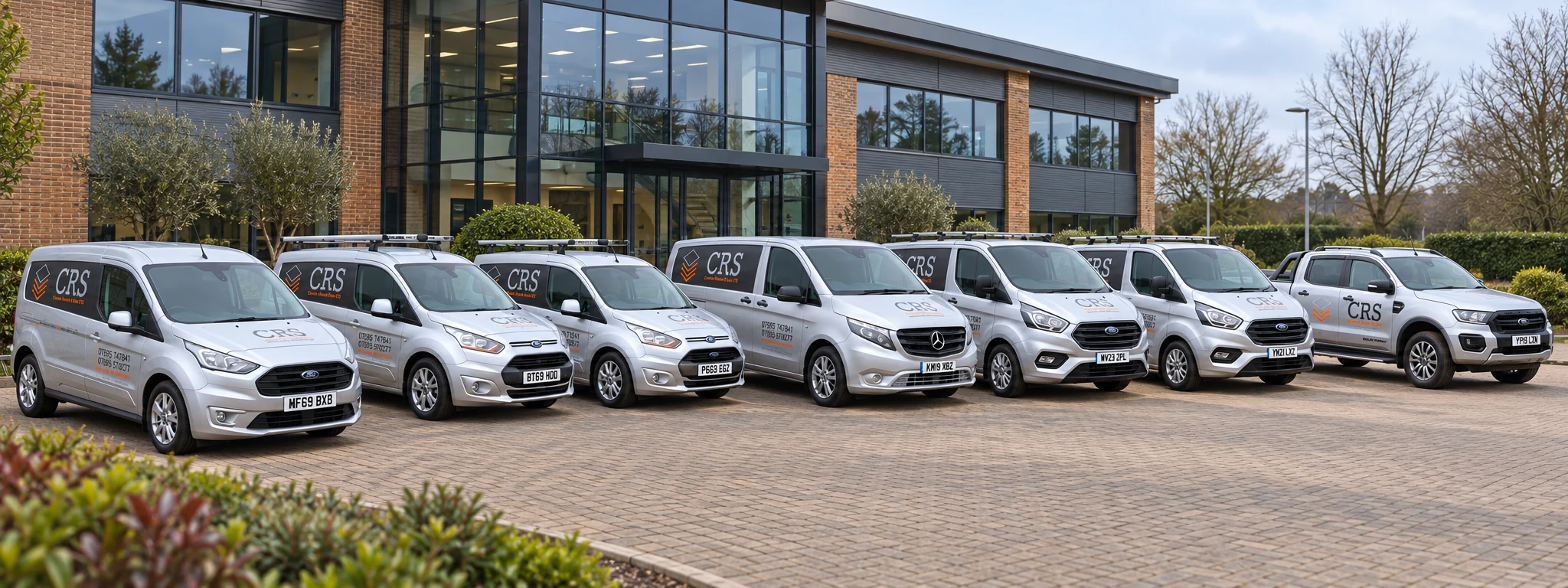 CRS fleet · composite image
A coordinated emergency lighting scope
Emergency lighting needs an agreed installation and testing scope linked to the building’s use and escape arrangements. We work with the responsible team and relevant information when planning new work or maintenance.
We discuss the building's use, escape arrangements and available fire-safety information before defining the work. Relevant plans and requirements should be coordinated with the responsible person and any fire-safety specialist.
Our electrical work does not replace a fire risk assessment.
What we can do for your premises.
New installations and alterations
We can install emergency luminaires, exit signs and associated arrangements within the agreed design. Changes to rooms, escape routes or normal lighting may require the emergency lighting provision to be reviewed.
Commissioning and appropriate records are provided for the agreed installation.
Manual and self-test systems
We work with suitable manual-test and self-test arrangements. Automated testing does not remove the need to review results, inspect relevant equipment and address faults.
The responsible team needs to understand how the system is checked and recorded.
Monthly functional tests
A short functional test checks operation on the emergency supply. This is different from a full-duration test.
We can agree a testing arrangement and suitable records for your premises.
Annual duration testing
The annual test checks operation for the system's full rated duration. The required duration depends on the system and design; it should not automatically be assumed to be the same for every installation.
Battery recharge time and safe occupancy arrangements need consideration when scheduling the work.
Faults and replacements
We investigate failed fittings, batteries and other identified issues. Replacement parts must be suitable and compatible; obsolete equipment may need replacement rather than repair.
Further work and parts are agreed within the scope.
Testing records
We record the work carried out, relevant results and identified issues. Access restrictions or other limitations are made clear.
Flexible arrangements
Emergency lighting work can be arranged as a one-off visit or part of planned maintenance. Outside-hours attendance is subject to availability.
Arranging testing around occupancy
Functional testing and full-duration testing serve different purposes. For duration tests, we discuss the rated duration, safe timing and the battery recharge period before the premises depend on the system again. Access limitations and any issues found are recorded.
Keeping a usable record
Testing information should help the responsible person identify what was checked, what failed and what needs attention. Self-test systems still need their results reviewed and faults addressed. Replacement batteries and components must be suitable for the installed equipment.
Clear scope. Coordinated delivery.
Survey & scope
We assess your building, discuss how you use it and agree what the installation needs to achieve.
Planning
We coordinate layouts, access, equipment requirements and shutdowns with your programme.
Installation
We carry out the agreed work, coordinate with other trades and keep you informed of changes.
Testing & handover
We test the completed work and provide appropriate records and certification for the agreed scope.
Clear scope. Proper handover.
Clear quotations
Scope, access and responsibilities explained before starting.
Coordinated delivery
Shutdowns and installation work planned with your team.
Useful documentation
Appropriate testing, certification and information at completion.
Built for today. Planned for future growth.
We discuss your plans and explain which allowances are worthwhile.
Electrical capacity
Space for cabling
Flexible installations
Accessible routes
Future equipment
Future additions depend on compatibility, available capacity and any necessary approvals. We explain practical options and costs before work is agreed.
Great Yarmouth · Norwich · Lowestoft · King’s Lynn · Cambridge
Commercial projects across Norfolk, Suffolk & Cambridgeshire.
Based in Great Yarmouth, CRS works with businesses in Norwich and across the surrounding area. Tell us where your premises are and what you need; we will discuss the project scope, access and availability.
LASTING RELATIONSHIPS.
Frequently asked questions.
Does a self-test system remove the need to check it?
No. Results still need reviewing, equipment needs relevant inspection and faults must be addressed. The responsible team needs suitable records.
Is the annual duration test always three hours?
The test relates to the system’s full rated duration and design. We confirm the relevant system information rather than assuming every installation is identical.
Can emergency lighting be included in planned maintenance?
Yes. We can discuss an agreed testing and maintenance schedule, or a one-off visit.
Related commercial services.
Discuss your premises
Tell us the location, scope and timing of your project.
We use your details to respond to your enquiry. Privacy information.